

When buying or selling a home, most of the focus naturally goes toward pricing, negotiations, and financing. What often receives less attention — but carries significant legal and financial weight — is title.
Title is not just a document. It represents your legal ownership of a property and your right to use, transfer, or sell it. Understanding how title works, and how it is reviewed during a transaction, is essential to protecting your investment.
What "title" actually means
In real estate, title refers to the legal rights associated with ownership of a property. A clear title confirms that:
- The seller has the legal right to transfer ownership
- There are no undisclosed claims against the property
- Ownership can transfer without legal dispute
If title is not clear, the transaction cannot properly close.
The role of the title company
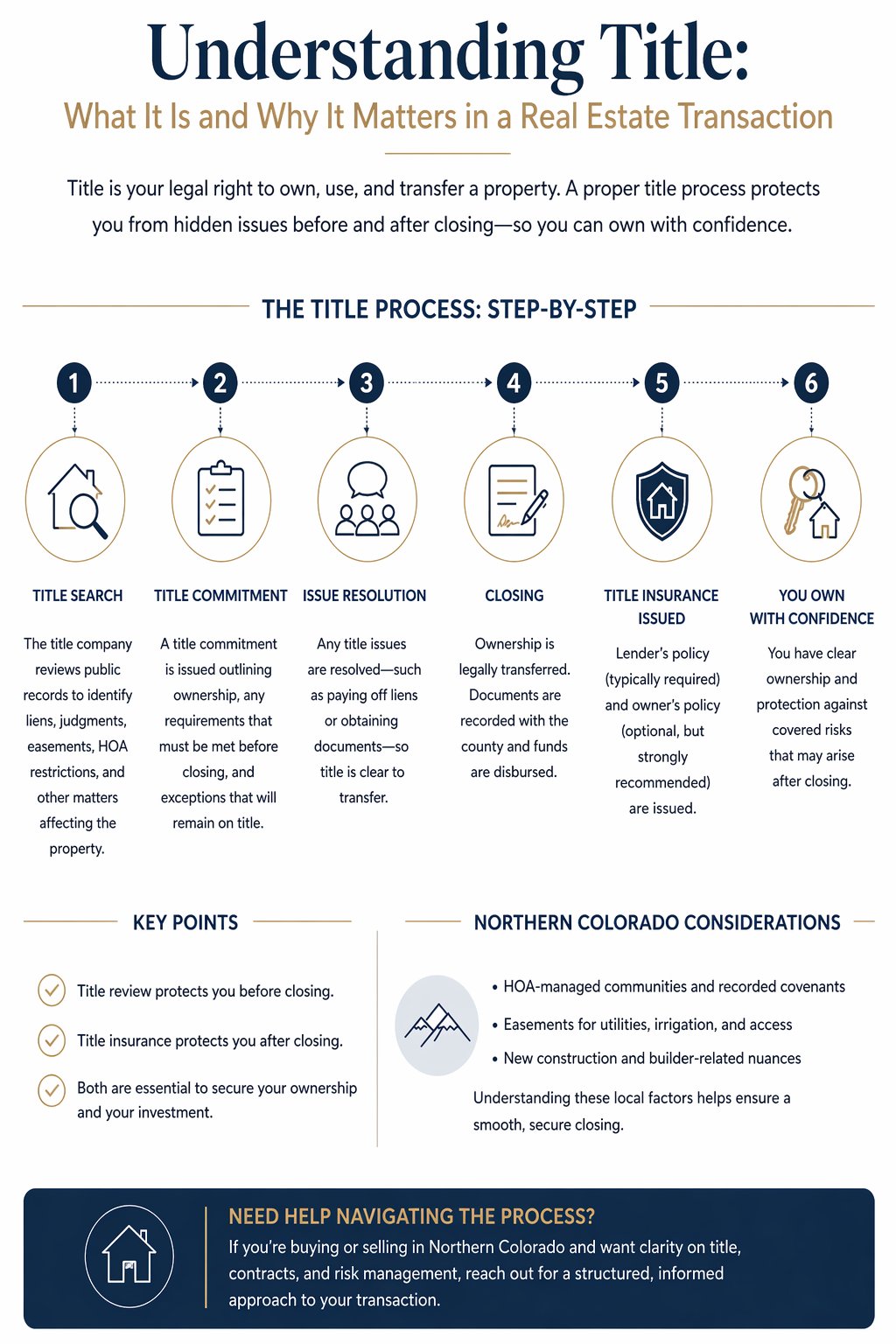
In Northern Colorado, a title company acts as a neutral third party responsible for reviewing and facilitating the transfer of ownership. Their responsibilities include:
- Conducting a title search
- Identifying liens, judgments, or encumbrances
- Issuing a title commitment
- Providing title insurance
- Coordinating the closing process
This is a structured process, and each step is designed to ensure that ownership transfers cleanly and without future legal complications.
The title search: what they are looking for
A title search examines the property's history to identify any issues that could affect ownership. Common findings include:
- Existing mortgages or liens
- Unpaid taxes
- Easements such as utility access
- HOA restrictions
- Judgments against the property
Not all findings are problematic. The key is understanding which items must be resolved before closing and which are standard and expected.
Title commitment: your roadmap
After the search, the title company issues a title commitment. This document outlines:
- The current ownership of the property
- Requirements that must be satisfied before closing
- Exceptions that will remain on title such as easements or covenants
This is one of the most important documents in the transaction — a roadmap of what needs to happen before ownership can transfer.
Real examples: why title matters
Before closing — unreleased lien
A title search revealed an old lien from a previous owner that had been paid but never formally released. The transaction could not close until the issue was resolved. The title company worked to obtain and record the lien release, allowing the buyer to receive clear ownership.
Takeaway: Even resolved debts can create problems if not properly recorded. Title review ensures these issues are caught before closing.
After closing — mechanic's lien
A homeowner was notified months after closing of a mechanic's lien filed for unpaid work completed prior to the sale. Although the new owner had no involvement, the lien attached to the property. Because they had owner's title insurance, the title company handled the claim and protected the homeowner from financial loss.
Takeaway: Some risks only appear after closing. Title insurance protects your ownership when they do.
Title insurance: protection after closing
Even with a thorough title search, risks can still exist — such as errors in public records, undisclosed heirs, or forgery. Title insurance protects against these risks. There are two types:
- Lender's policy — required by the lender
- Owner's policy — optional, but strongly recommended
An owner's policy protects your ownership rights for as long as you own the property. In many cases, buyers also have the option to obtain extended coverage, which can remove certain "gap" exceptions and provide broader protection.
Common misconceptions
"If there's a problem, it will just get fixed."
Not always. Some title issues can delay or even prevent closing if not addressed properly.
"Title insurance covers everything."
It covers specific risks, not every possible issue. Understanding the policy matters.
"This is just paperwork."
Title is a legal foundation of the transaction, not an administrative step.
Northern Colorado considerations
In this market, certain factors appear more frequently:
- HOA-managed communities with recorded covenants
- Easements for utilities and irrigation
- New construction developments with builder-related title nuances
Understanding these local elements helps ensure nothing is overlooked during the review process.
Final thought
A real estate transaction is not just about agreeing on a price. It is about transferring ownership in a way that is legally sound and protected.
Title is the foundation of that transfer. When handled correctly, it is seamless. When overlooked, it can create long-term complications.